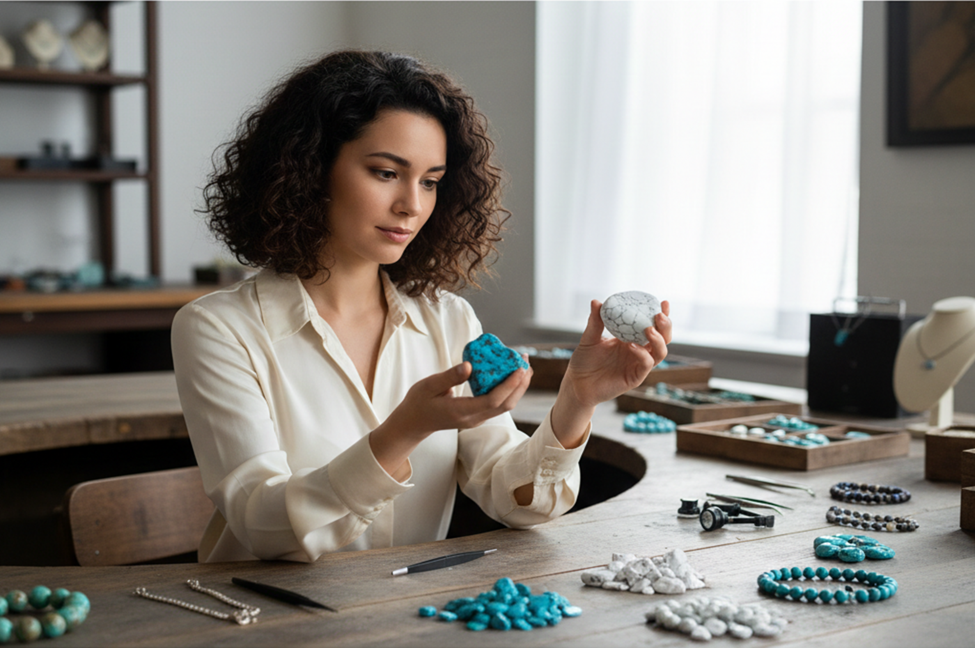
At first glance, turquoise and howlite look very similar. Both stones contain shades of blue and are used in jewelry. A lot of buyers get confused by this visual overlap. As a result, some think that they are buying turquoise. But what they really get is howlite, which is also sometimes dyed.
It’s not always easy to tell what kind of stone it is. This makes it hard to tell what’s real. In this blog, we’ll differentiate between turquoise and howlite.
What is turquoise?
Turquoise is a natural stone with a long history. It was important to ancient civilizations for its beauty and safety. This gemstone is generally found in dry places. It’s made with an amalgamation of water, copper, and minerals in the ground. Turquoise’s blue color comes from copper, whereas the green veins are a result of iron.
Natural turquoise is hard to find, which adds to its value. However, you can get such stones from GemstonesforSale. Their collection is wide-ranging and contains natural stones only.
What is howlite?
Howlite is a mineral that occurs naturally. It was found in the 1800s and is more commonly available than turquoise. A natural or an untreated howlite is white or light gray in color. It has dark gray or black veins. These veins are similar to the turquoise matrix. This is why howlite is often dyed blue. People often use dyed howlite instead of turquoise. It looks the same but costs less.
Differences In Color And Appearance
You should start by looking at the color first. Turquoise usually has natural color changes. The blue might change a little bit to green. Its surface isn’t too smooth. On the other hand, a dyed howlite is very smooth. Its blue color can either appear too dull or bright, which is visible in fake stones as well.
There are also different matrix patterns. For example, the matrix in turquoise looks natural, whereas the one in howlite looks sharp and different from each other. That’s the main difference you should assess when you buy turquoise stone online.
Comparing Other Factors
Now that we know how turquoise and howlite look, let’s explore a few more factors of differentiation:
Feel and texture of the surface
When you touch turquoise, it feels smooth. It usually has a finish that feels a little waxy. It doesn’t feel like chalk. On the other hand, howlite usually feels like powder or dry. It soaks up dye easily because it is porous. The color might come off sometimes.
If you can, check the bead drill holes. Howlite that has been dyed white usually has white interiors. However, a turquoise stays blue the whole time.
Hardness and long-lasting
Turquoise isn’t very hard. On the Mohs scale, it ranks around 5 to 6. But it can last a long time in jewelry if you take care of it. On the contrary, howlite is a softer stone comparatively. It ranks about 3.5 on the Mohs scale, which makes it prone to chipping and scratches. You need to be careful with both stones, especially with the howlite.
Pricing
The price is a big hint. A high-quality turquoise is expensive and isn’t available at a discounted price. Even the lower-quality stones have a certain price. If the price is too good to be true, then chances are that it’s a fake stone. Coming onto howlite now, know that it’s an affordable and easy-to-find stone. This price difference is what causes confusion a lot of the time.
Treatments
A lot of turquoise stones often go through treatments such as stabilization. It’s a normal and widely acceptable process, which enhances the color and durability of the stone. What matters is being transparent. Sellers who are honest clearly explain the treatments. It is important to always label dyed howlite correctly. Descriptions that aren’t clear are a red flag.
How To Pick The Right Stone For You
It all depends on what you want to do. If you value real and rare stones, then turquoise is the better choice. However, if you need something less expensive, then go for howlite. Making an informed choice is the most important thing.
Last Thoughts
Turquoise and howlite may look the same. But these stones are very different. One is hard to find and worth a lot. The other is affordable and easy to find. Knowing the differences will help you as a buyer. It enables you to shop with confidence and make better choices. In the end, honesty and knowledge are the keys to real beauty.